Showing posts with label Aperture. Show all posts

Wednesday, April 5, 2017

Apr 5 - D for Depth of Field #AtoZChallenge

Example of Deep DoF with f stop 6.3 & shutter 1/20 sec
D for Depth of Field. Depth of field (DoF) is one of the most important concepts in photography. DoF is the depth of the area in the photo that is in focus and sharp. DoF varies from photo to photo. There are many factors that affect DoF filed and Aperture is one of them.

Aperture is the opening of the lens and depending on the size of the opening, DoF varies. Aperture is measured in f stop. When lens opening is small, f stop number is big, resulting in a deep the DoF and conversely, when the lens opening is larger, f stop number is small resulting in a shallow DoF.

Above picture is an example of deep DoF where the entire frame is in focus. Deeper DoF is used when everything in the photo needs to be sharp and in focus, such as in landscape photography.

Example of shallow DoF with f stop 1.8, shutter 1/200 sec
Above picture is an example of shallow depth of field where the bottle in the foreground is in focus and rest of the bottles and the backdrop gradually go out of focus. Shallow DoF is used for portraits, bokeh and often for macro photography.

I usually shoot in manual mode. I used almost same set up for both the photos but different settings. Since aperture is different for both the photos, I had to adjust other settings. Aperture not only affects DoF but also the amount of light that goes into the camera, hence had to adjust teh shutter speed. I shall talk more about it tomorrow.

Camera: Nikon 5100, 50mm f/1.8 prime lens
Picture of the day in 2012: Devil, the one with horns
Picture of the day in 2011: Wet flowers

Monday, April 3, 2017

Apr 3 - B for Bokeh #AtoZChallenge

B is for Bokeh. It is pronounced booke, boo as in bow and ke as in kettle. Bokeh is derived from a Japanese word boke which means blur. In photography, bokeh is the affect of the blur that is created in parts of the image that are out of focus. There are many definitions to bokeh and one of them is "the way the lens renders out-of-focus points of light". Visual affects of a bokeh depends largely on type of lens and it's fastness.

Most common examples of bokeh are holiday lights where out of focus area forms bubbles or circles. My first image doesn't have any circle/bubbles in the out of focus parts of the image but it does have a nice blur. Not sure if this is a good bokeh or a bad bokeh. By the way, cherry blossoms are just beginning to blossom in Central Park and this year they are late. Looking forward to my walks in the park when the blossoms are in full bloom.

Below are more examples of bokeh from the archives, though non with holiday lights :(

This image is from last May. Natural light coming through the leaves created a bokeh effect, white circles.
This image is from 2015 summer
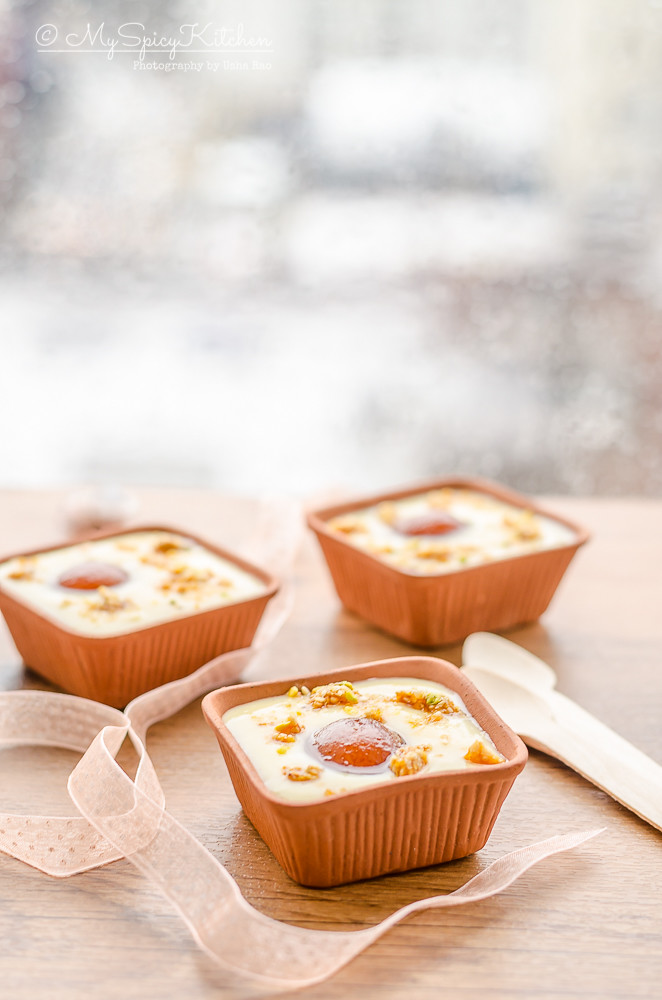
All the above images are with Sony Mark 3 Rx 100. As mentioned above, the shape and size of bokeh depends on the lens used. A prime lens is usually recommended and mode of shooting should either be manual or aperture priority. Always try to use an aperture of 2.8 or below. The below image is from my food blog, I shot with my Nikon 5100 using a 50mm prime lens f/1.8. Here I used an aperture or f stop of 3.5. You can see some white circles on the left top corner and in the center right of the image. Below image is also an example of B for backlight, where the source of light is behind the subject.
Camera: Sony Mark 3 RX 100
Picture of the day in 2013: Bridges
Picture of the day in 2012: Grass
Picture of the day in 2011: Tax documents